

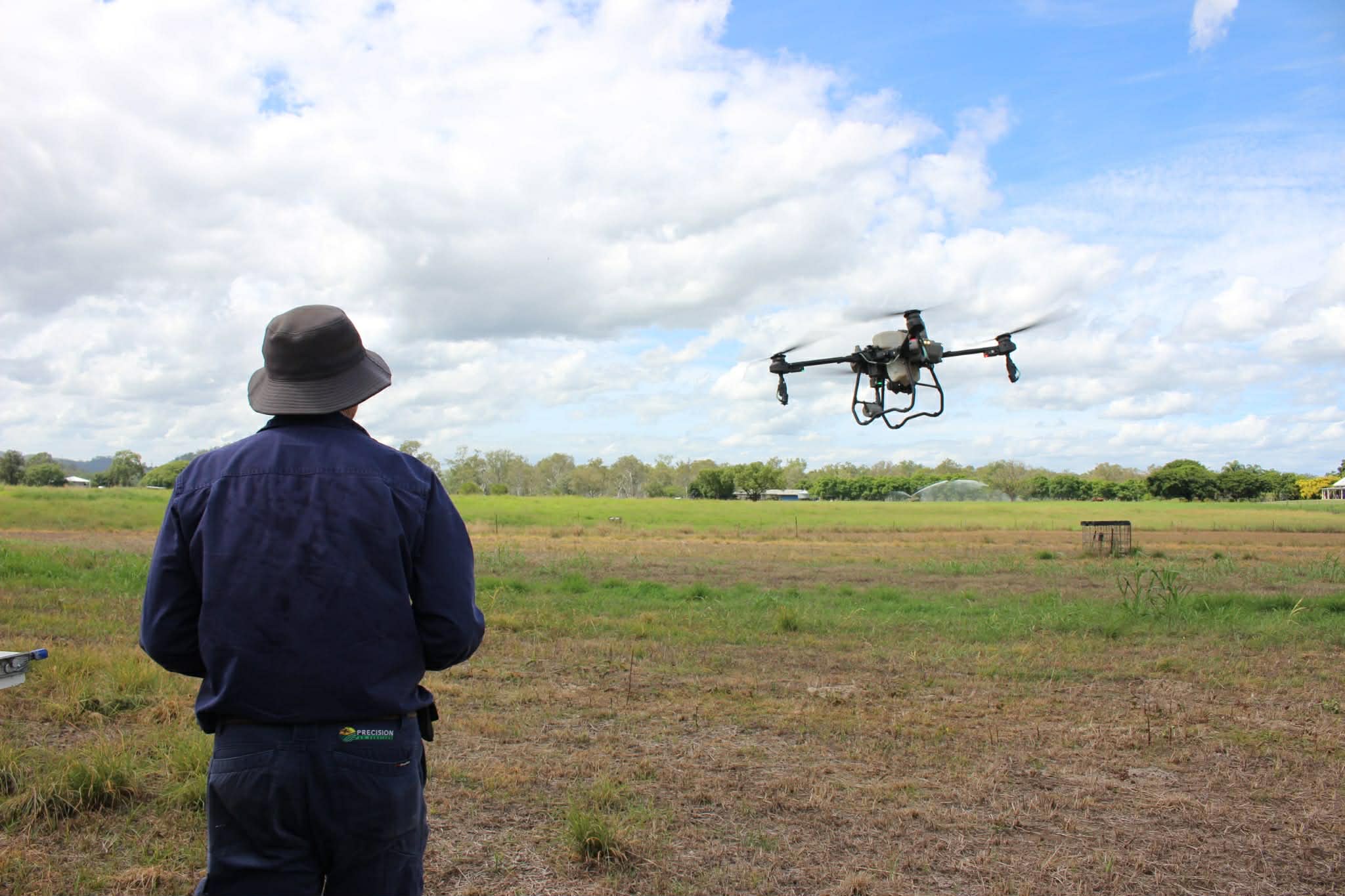
If you’re a farmer weighing up whether to bring drone spraying onto your property, cost is usually the first question — and a fair one. Aerial spraying technology has moved quickly from a novelty to a genuine farm tool across Australia, but pricing can feel like a black box if you haven’t used the service before.
In this guide, we break down what drives the cost of drone spraying, how it stacks up against traditional ground-based and manned aircraft methods, and what to ask before you book a service.
Why Drone Spraying Costs Are on Farmers’ Minds
Australian growers are under pressure from more directions than ever — rising input costs, tighter margins, unpredictable weather, and a shrinking pool of available farm labour. Aerial spraying by drone has become one of the more practical answers to these pressures, because it reduces the labour and time needed to treat a paddock while still delivering precise, targeted application.
For farmers in regions like the Lockyer Valley and South East Queensland, where terrain can be steep or difficult for ground rigs to access, drone spraying also opens up areas that were previously hard or unsafe to treat consistently.
What Affects the Cost of Drone Spraying
Drone spraying pricing isn’t one-size-fits-all. A few key factors typically shape the final cost of a job:
- Paddock size and shape — larger, more regular blocks are generally more cost-efficient per hectare than small or irregular ones.
- Terrain and accessibility — steep or uneven ground that would otherwise need a ground rig (or be unreachable altogether) may cost differently than flat, open paddocks.
- Chemical or product being applied — the substance being sprayed (pesticide, fertiliser, herbicide) affects both application rate and cost.
- Coverage area and frequency — one-off jobs versus ongoing seasonal spraying arrangements.
- Travel distance — properties further from the operator’s base may attract a callout or travel component.
As each job varies, drone operators would typically offer either a cost per hectare rate, a fixed fee, or for prolonged or regular work they might offer a reduced hectare rate. Likewise, cost is impacted most by the volume needing to be sprayed. Some jobs might only require 20L a hectare, meaning more ground can be covered quicker. Compare this to spraying at 100L a hectare and it becomes slower and thus a greater cost per hectare. General guidelines in Australia would be $30–$140 a hectare, with many aspects of the job altering it.
It’s also worth checking with your local agronomist before assuming drone spraying is viable for your situation — not every chemical is registered for aerial application, and the right product for your paddock may affect both what’s possible and what it costs. We touch on this more in the FAQ below.
Where the Savings Show Up Over Time
While the upfront cost of a drone spraying job is one part of the picture, the ongoing savings often matter more to farmers making the switch:
- Less chemical waste through targeted, accurate application to only the areas that need it.
- Water conservation, since aerial spraying by drone typically uses less water than conventional ground-based methods.
- Reduced soil disturbance, avoiding the compaction that comes from repeated ground rig passes — which can protect long-term soil health and yield.
- Time saved, especially during critical growth windows when timing matters more than doing the job the cheapest way possible.
Is Drone Spraying Worth the Cost for Your Farm?
The right answer depends on your paddock size, terrain, and what you’re currently paying for ground or aerial spraying. As a general guide, drone spraying tends to make the most sense when:
- You have terrain that’s difficult, steep, or unsafe for ground equipment.
- You want to reduce chemical and water usage without sacrificing coverage.
- You need spraying done quickly during a tight window in the growing season.
- You’re looking to minimise soil compaction across the property.
Recently we completed a job whereby we needed to target Lantana and Blady grass in extremely steep terrain with limited access by vehicle, let alone an ATV. In six hours, we managed to cover close to 10 hectares of country with ease.
Related Services from Precision Ag Services
Drone spraying is just one part of a broader precision agriculture toolkit. If you’re weighing up spraying against other drone applications, it’s worth looking at:
- Aerial Seeding & Granular Spreading — for cover crops, fertiliser, and pasture seeding.
- Aerial Mapping — for NDVI, multispectral, and 3D crop mapping to guide where and when spraying is actually needed.
- Case Studies — real examples of how drone services have been used on Queensland farms.
Frequently Asked Questions
How much does drone spraying cost per hectare in Australia?
General guidelines in Australia would be $30–$140 a hectare, with many aspects of the job altering it.
Is drone spraying cheaper than hiring a manned aircraft?
Costs vary by job, but drone spraying often works out more cost-effective for smaller or harder-to-access paddocks, since it avoids the higher operating costs and minimum charges associated with manned aircraft.
Does drone spraying reduce chemical costs?
Yes — because drone spraying allows for precise, targeted application, it typically reduces the overall volume of chemical needed compared to broadacre ground spraying.
How do I get a quote for drone spraying on my property?
Simply fill in an enquiry form and we will be in contact. Typically, we would have a quick chat to discuss what it is exactly you want doing and, if need be, we would come and take a look for ourselves. From that we would give a price indication.
Is drone spraying suitable for all crop types?
Most crop types could be sprayed with a drone. However, the major stumbling block is the chemicals required. In Australia, all chemicals have a label stating how much of the product is required to target the species it’s going for, and this label also outlines the requirements or standards for using it. If the label doesn’t state that it can be used aerially, then a drone cannot spray it.
This can sometimes be worked around, as there might be other options available with another chemical that can be sprayed aerially. For the best advice or guidance, seek out your local agronomist.
Get an Accurate Quote for Your Property
Every paddock is different, and the best way to understand what drone spraying will cost for your farm is to talk to someone who knows your property type and terrain. Precision Ag Services is a family-run business based in the Lockyer Valley, serving South East Queensland and beyond.
